标准版
The Cornerstones of Personal and Societal Development: Education and Training**
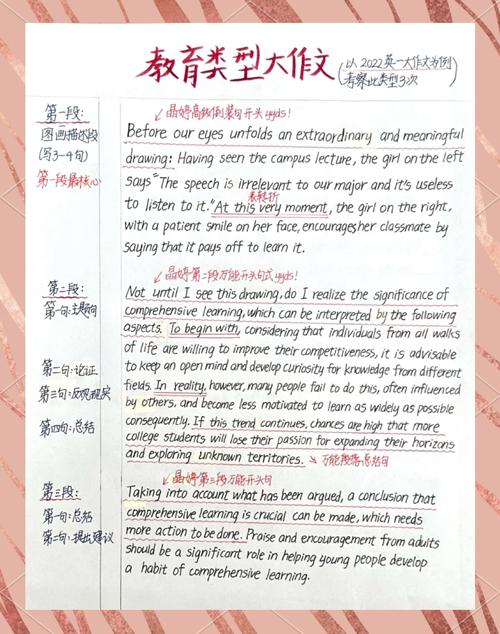
In an era defined by rapid technological advancement and global competition, the importance of education and training cannot be overstated. They are the twin engines that drive both individual growth and the progress of a society. While often used interchangeably, education and training serve distinct yet complementary roles in shaping our future.
Education, in its broadest sense, is the foundation upon which a person's intellectual and personal development is built. It is not merely about acquiring knowledge in subjects like mathematics, science, and literature. More importantly, education cultivates critical thinking, creativity, and problem-solving abilities. It teaches us how to learn, how to analyze information, and how to form our own opinions. A well-educated individual is equipped not just for a job, but for life, able to adapt to new challenges and contribute meaningfully to their community.
Training, on the other hand, is more focused and practical. It is designed to provide individuals with the specific skills and competencies required for a particular job or task. For example, a software training course teaches how to use a specific programming language, while a customer service training program hones communication and conflict-resolution skills. Training is the bridge between theoretical knowledge and practical application, making job seekers more employable and helping employees stay relevant in a constantly evolving job market.
The true power of education and training is realized when they work together. Education provides the "why" and the "how-to-think," while training provides the "what-to-do." An engineer with a strong educational background in physics can understand the fundamental principles of a bridge's design, but it is specific technical training that enables them to use the software to model and build it safely and efficiently. Therefore, a balanced approach that combines a broad-based education with targeted vocational training is essential for preparing individuals for the complexities of the modern world.
In conclusion, education and training are indispensable pillars of a thriving society. Education empowers individuals with wisdom and critical faculties, while training equips them with the practical skills to turn that wisdom into action. Investing in both is not just an investment in individuals; it is an investment in a nation's innovation, economic prosperity, and social well-being.
中文翻译 (版本一)
个人与社会发展的基石:教育与培训**
在一个由快速技术进步和全球竞争定义的时代,教育和培训的重要性怎么强调都不为过,它们是推动个人成长和社会进步的孪生引擎,虽然教育和培训经常被混用,但它们在塑造我们未来方面扮演着不同却互补的角色。
从最广泛的意义上讲,教育是个人智力和个人发展的基石,它不仅仅是学习数学、科学和文学等学科的知识,更重要的是,教育培养了批判性思维、创造力和解决问题的能力,它教会我们如何学习、如何分析信息以及如何形成自己的观点,一个受过良好教育的人不仅为一份工作做好准备,更是为生活做好准备,能够适应新的挑战并为他们的社区做出有意义的贡献。
培训则更加专注和实用,它的目的是为个人提供特定工作或任务所需的特定技能和胜任力,软件培训课程教授如何使用特定的编程语言,而客户服务培训项目则磨练沟通和冲突解决技能,培训是理论知识与实际应用之间的桥梁,它使求职者更具就业能力,并帮助员工在不断变化的就业市场中保持相关性。
当教育和培训协同工作时,它们真正的力量才能得以实现,教育提供了“为什么”和“如何思考”,而培训则提供了“做什么”,一位拥有坚实物理学教育背景的工程师可以理解桥梁设计的基本原理,但正是具体的技术培训使他能够使用软件来安全、高效地建模和建造桥梁,一种将广博的教育与有针对性的职业培训相结合的平衡方法,对于个人为现代世界的复杂性做好准备至关重要。
教育和培训是一个繁荣社会不可或缺的支柱,教育赋予个人智慧和批判能力,而培训则为他们提供将智慧付诸实践的实用技能,投资于教育和培训,不仅是对个人的投资,更是对一个国家的创新、经济繁荣和社会福祉的投资。
进阶版
Symbiotic Growth: The Interplay Between Education and Training in the 21st Century**
The discourse surrounding human capital development invariably converges on two pivotal concepts: education and training. While historically viewed through distinct lenses, the 21st-century landscape demands a more nuanced understanding of their symbiotic relationship. They are not sequential steps but rather interwoven threads in the tapestry of lifelong learning, collectively shaping an individual's capacity for innovation and societal contribution.
Education, at its core, is a transformative process that transcends the mere transmission of information. It is the cultivation of a cognitive framework—a lens through which an individual perceives, questions, and engages with the world. It fosters intellectual curiosity, ethical reasoning, and the ability to synthesize disparate ideas into novel solutions. In essence, education equips a person with the metacognitive skills to navigate ambiguity, think systemically, and adapt to unforeseen challenges. It is the bedrock of a resilient and adaptable workforce, capable of driving paradigm shifts rather than merely executing predefined tasks.
Conversely, training represents the specialized application of this cognitive framework. It is the process of skill acquisition, tailored to meet the specific demands of a vocation, industry, or technology. Training translates the abstract principles learned in education into tangible competencies. A data scientist, for instance, might be educated in statistical theory, but it is rigorous training in machine learning algorithms and data visualization tools that empowers them to extract actionable insights from complex datasets. Training is the engine of operational efficiency and immediate productivity, ensuring that an individual's knowledge can be effectively deployed to solve real-world problems.
The modern economy, characterized by volatility, uncertainty, complexity, and ambiguity (VUCA), renders the traditional education-then-training model obsolete. The most successful professionals are those who engage in a continuous feedback loop between the two. A project manager might receive foundational education in organizational behavior, but ongoing training in agile methodologies and digital collaboration tools is essential for their effectiveness. This dynamic interplay allows for the seamless integration of foundational knowledge with cutting-edge practice, fostering a culture of perpetual learning and innovation.
In conclusion, to view education and training as separate entities is to fundamentally misunderstand the requirements of contemporary personal and professional development. They are intrinsically linked, with education providing the "why" and the strategic vision, and training providing the "how" and the tactical execution. A holistic approach that nurtures both the intellectual breadth of education and the specialized depth of training is paramount. It is this synergy that empowers individuals not only to succeed in their careers but also to become architects of a more dynamic, innovative, and prosperous future.
中文翻译 (版本二)
共生性增长:21世纪教育与培训的相互作用**
关于人力资本发展的讨论,总会聚焦于两个核心概念:教育和培训,虽然历史上人们从不同的角度看待它们,但21世纪的格局要求我们对它们之间共生关系有更细致的理解,它们不是先后步骤,而是终身学习织锦中相互交织的线,共同塑造了个人创新和社会贡献的能力。
教育的核心是一个超越信息传递的转化过程,它是一种认知框架的培养——一种个体用以感知、质疑和与世界互动的透镜,它培养的是智力上的好奇心、伦理推理能力,以及将不同思想综合成新颖解决方案的能力,本质上,教育赋予个人一种元认知技能,使其能够应对模糊性、进行系统性思考并适应不可预见的挑战,它是一个富有韧性和适应性劳动力的基石,能够推动范式转变,而不仅仅是执行预定义的任务。
相反,培训代表了这种认知框架的专业化应用,它是一个技能获取的过程,旨在满足特定职业、行业或技术的需求,培训将在教育中学到的抽象原则转化为具体的胜任力,一位数据科学家可能受过统计学理论的教育,但正是对机器学习算法和数据可视化工具的严格培训,才使他们能够从复杂数据集中提取可操作的见解,培训是运营效率和即时生产力的引擎,确保个人的知识能够被有效部署以解决现实世界的问题。
以波动性、不确定性、复杂性和模糊性(VUCA)为特征的现代经济,使得“先教育,后培训”的传统模式已经过时,最成功的专业人士是那些在这两者之间进行持续反馈循环的人,一位项目经理可能接受过组织行为学的基础教育,但持续学习敏捷方法论和数字协作工具的培训对于其效能至关重要,这种动态的相互作用使得基础知识和前沿实践能够无缝整合,从而培养一种持续学习和创新的文化。
将教育和培训视为独立的实体,就是从根本上误解了当代个人和专业发展的要求,它们是内在相连的,教育提供“为什么”和战略愿景,而培训提供“如何”和战术执行,一种既培育教育的知识广度,又培训专业深度的整体方法是至关重要的,正是这种协同作用,不仅使个人能够在职业生涯中取得成功,更能让他们成为构建一个更动态、创新和繁荣未来的建筑师。
核心词汇与短语
通用词汇:
- Cornerstone / Pillar: 基石,支柱
- Indispensable: 不可或缺的
- Symbiotic / Interwoven: 共生的,交织的
- Holistic: 整体的,全面的
- Prosperity: 繁荣
- Well-being: 福祉
版本一词汇:
- Acquire knowledge: 获取知识
- Cultivate critical thinking: 培养批判性思维
- Practical application: 实际应用
- Employability: 就业能力
- Economic prosperity: 经济繁荣
版本二词汇:
- Pivotal concept: 核心概念
- Transformative process: 转化过程
- Cognitive framework: 认知框架
- Metacognitive skills: 元认知技能
- VUCA (Volatility, Uncertainty, Complexity, Ambiguity): 波动性、不确定性、复杂性和模糊性
- Paradigm shift: 范式转变
- Tactical execution: 战术执行
- Perpetual learning: 持续学习 对您有所帮助!您可以根据自己的需求选择合适的版本,并借鉴其中的词汇和句式。
标签: 教育与培训英语作文写作技巧 英语教育与培训类作文模板 如何写好教育与培训主题英语作文