Of course. The word "while" is an incredibly versatile and powerful tool in English academic writing. It's not just used for time; its primary function is to show contrast, concession, and complexity.
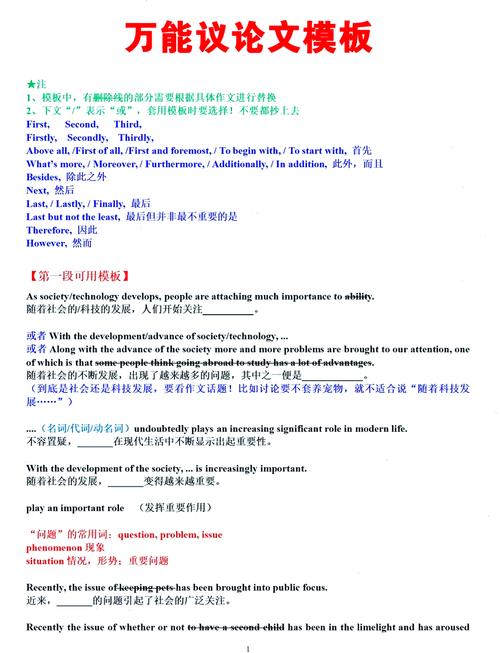
Using "while" effectively can elevate your essay from a simple "A is good, B is bad" to a sophisticated "A has strengths, but B also has merits, and a deeper analysis reveals..." This is the hallmark of a strong argument.
Here’s a comprehensive guide on how to use "while" in an English argumentative essay, broken down by its functions, with examples and a sample essay.
The Core Function: Introducing Contrast and Concession
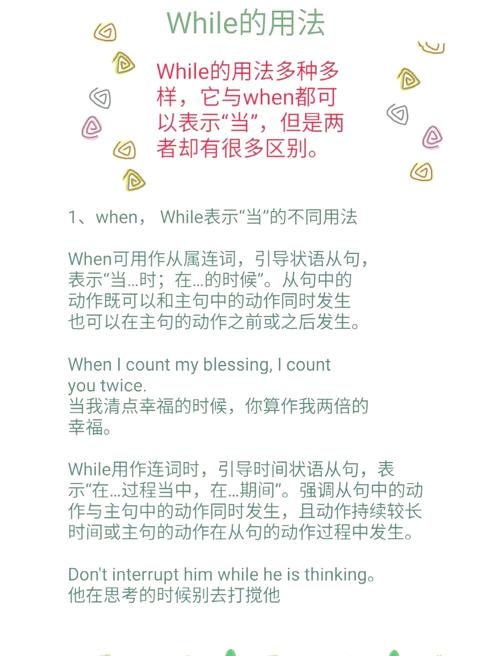
This is the most common and important use of "while" in an essay. It signals to the reader that you are about to present an idea that contrasts with or concedes to a point that has just been made or is generally accepted.
Structure: While [Point A is true], [Point B is also true or more significant].
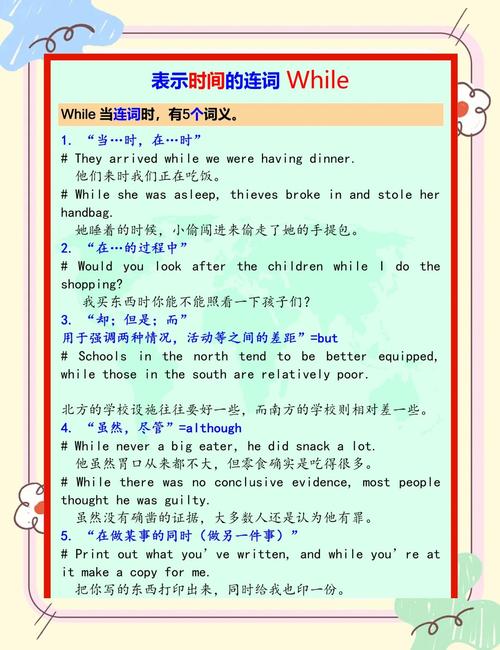
Key Idea: You are not necessarily saying Point A is wrong. You are acknowledging it to show that the situation is more nuanced.
Different Ways to Use "While" in Your Essay
A. To Introduce a Counter-Argument (Concession)
This is a classic technique for building credibility. You show you understand the opposing view before you present your own stronger one.
- Function: "I acknowledge that my opponent has a valid point, but..."
- Placement: Often at the beginning of a body paragraph.
Example:
While some argue that social media fosters global connection and community, its detrimental effects on mental health and the spread of misinformation present a more pressing concern that cannot be ignored.
(图片来源网络,侵删)
Analysis:
- The clause after "while" ("some argue that social media fosters...") is the concession. It acknowledges a common belief.
- The main clause ("its detrimental effects... present a more pressing concern") states the essay's stronger, more central argument.
B. To Juxtapose Two Sides of an Issue (Complexity)
This is useful for "discuss both views" essays or when analyzing a topic with two strong, competing aspects.
- Function: "Let's look at both sides of this coin."
- Placement: Can be used in the introduction to frame the debate or in a body paragraph to compare and contrast.
Example:
While the economic benefits of globalization are undeniable, leading to increased trade and innovation, the social and cultural costs, such as the erosion of local traditions and job displacement in certain sectors, are equally significant and demand careful consideration.
Analysis:
- This sentence doesn't concede that one side is less important. It presents both the economic benefits and the social/cultural costs as equally important facets of the same issue.
C. To Refine Your Own Thesis (Nuance)
Sometimes, a simple thesis is too black-and-white. Using "while" can add a layer of sophistication and show you've thought deeply about the topic.
- Function: "My main argument is X, although I recognize Y."
- Placement: Usually in the introduction, as part of the thesis statement.
Example (Simple Thesis):
- Online education is the future of learning.
Example (Refined Thesis with "while"):
While traditional in-person education offers invaluable face-to-face interaction, the flexibility, accessibility, and technological integration of online platforms make it a more viable and effective model for the future of higher education.
Analysis:
- The refined thesis acknowledges a strength of the opposing model ("invaluable face-to-face interaction").
- It then clearly states its own position ("online platforms make it a more viable... model") without completely dismissing the other side.
Common Mistakes to Avoid
-
Using "while" for simple time. In academic writing, avoid using "while" to mean "during the time that." It can sound informal.
- Incorrect (informal):
While I was writing my essay, the internet went down. - Correct (more formal):
During the process of writing my essay, the internet connection was lost.
- Incorrect (informal):
-
Creating a Run-On Sentence. "While" connects two clauses. Make sure you have a complete sentence on both sides.
- Incorrect (Run-on):
While many people support the policy, I believe it is flawed.(This is actually a comma splice, a very common error. The two clauses could stand alone as sentences.)
- Correct:
While many people support the policy, I believe it is fundamentally flawed.(This is okay, but can be improved). - Better (more sophisticated):
Although many people support the policy, I believe it is fundamentally flawed.orThe policy, while supported by many, is fundamentally flawed in my view.
- Incorrect (Run-on):
-
Overusing "while." It's a powerful word, but using it in every paragraph can make your writing repetitive. Vary your sentence structure. Use other contrastive words like although, even though, whereas, on the other hand, in contrast, and however.
Sample Argumentative Essay Using "While"
Topic: The Impact of Artificial Intelligence on the Job Market
Thesis Statement:
While artificial intelligence promises to boost productivity and create new industries, its potential to displace a vast number of workers and exacerbate economic inequality necessitates proactive government intervention and a fundamental rethinking of education and social safety nets.
Body Paragraph 1 (Concession):
While proponents of AI rightly celebrate its capacity for automation and efficiency, these benefits come at a significant social cost. Repetitive, rule-based tasks in sectors like manufacturing, data entry, and even customer service are increasingly handled by sophisticated algorithms. This trend, while potentially lowering operational costs for corporations, threatens to leave millions of workers unemployed, lacking the skills required for the new jobs that AI is said to create. The transition is not seamless, and for many, it could be devastating.
Body Paragraph 2 (Juxtaposing Two Issues):
The debate over AI's impact is further complicated when we consider the dual nature of its economic consequences. While AI-driven innovation is expected to generate entirely new job categories in fields like AI ethics, machine learning maintenance, and data science, this does little to comfort the worker whose assembly line job has been automated. There exists a stark mismatch between the skills being rendered obsolete and those that are becoming in demand. This creates a dangerous scenario where economic growth and technological progress coexist with widespread personal hardship and social unrest.
Conclusion:
In conclusion, to view artificial intelligence as either an unqualified boon or an unmitigated disaster is to ignore its complex reality. While the technological advancements it brings are undeniable, we must confront the profound challenges it poses to the global workforce. Ignoring the risk of mass unemployment is as reckless as blindly resisting progress. Therefore, a proactive and multi-faceted approach is not just advisable, but essential. Governments must invest in robust retraining programs, and educational institutions must pivot towards fostering creativity and critical thinking—skills that machines cannot replicate. Only by preparing for the transition can we ensure that the AI revolution benefits all of society, not just a privileged few.
This essay demonstrates how "while" can be used to frame the thesis, introduce concessions, and add nuance to the argument throughout, creating a more persuasive and intellectually sophisticated piece of writing.
标签: 英文议论文while从句用法技巧 议论文中while从句的正确使用方法 英文写作while从句使用指南