Part 1: Core Vocabulary & Terminology (核心词汇与术语)
掌握这些词汇是进行思维导图培训的基础。
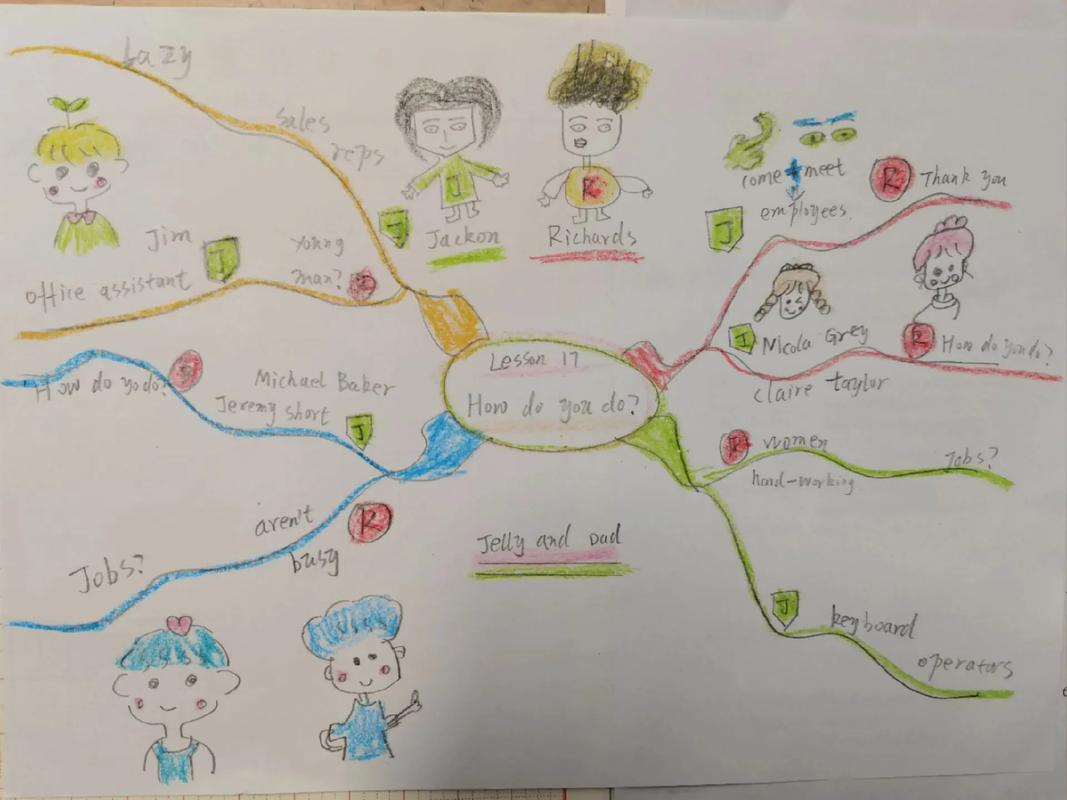
(图片来源网络,侵删)
思维导图相关词汇
| English | 中文 | 备注 |
|---|---|---|
| Mind Map | 思维导图 | 最核心的词 |
| Central Idea / Central Topic | 中心主题/中心话题 | 导图的核心 |
| Main Branch / Key Idea | 主干/主要分支 | 从中心延伸出的第一级分支 |
| Sub-branch | 子分支 | 从主分支延伸出的次级分支 |
| Keywords / Key Concepts | 关键词/核心概念 | 导图上的核心词汇,而非长句 |
| Association / Connection | 关联/连接 | 思维之间的联系 |
| Node / Bubbl | 节点/气泡 | 图中的一个单元,可以是文字或图像 |
| Radiant Structure | 放射状结构 | 思维导图的典型结构 |
| Visual Element / Imagery | 视觉元素/图像 | 帮助记忆和激发创意的图画 |
| Color Coding | 颜色编码 | 用不同颜色区分不同类别或层级 |
| Icons / Symbols | 图标/符号 | 简洁的图形,代表特定含义 |
| Hierarchy | 层级 | 导图的逻辑结构(中心、主干、子分支) |
培训流程相关词汇
| English | 中文 | 备注 |
|---|---|---|
| Training Module / Workshop | 培训模块/工作坊 | 本次培训的名称 |
| Trainer / Facilitator | 培训师/引导师 | 负责培训的人 |
| Trainee / Participant | 学员/参与者 | 接受培训的人 |
| Agenda / Outline | 议程/大纲 | 和流程安排 |
| Objective / Goal | 目标 | 培训希望达成的效果 |
| Icebreaker | 破冰活动 | 培训开始时的热身活动 |
| Demonstration / Demo | 示范/演示 | 培训师展示操作方法 |
| Hands-on Practice / Exercise | 实践练习/动手练习 | 学员亲自操作的部分 |
| Case Study | 案例分析 | 通过具体例子进行学习 |
| Group Discussion / Brainstorming | 小组讨论/头脑风暴 | 集体创作思维导图 |
| Q&A (Question and Answer) | 提问与解答 | 解答学员疑问的环节 |
| Wrap-up / Summary | 回顾 | 培训结束时的归纳 |
| Feedback | 反馈 | 的意见 |
Part 2: Training Process & Phrases (培训流程与实用句型)
这里模拟一个完整的培训模块,并提供培训师在每个阶段可能用到的英语句型。
Module: Introduction to Mind Mapping for Effective Learning
模块:高效学习之思维导图入门
Opening & Icebreaker (开场与破冰)
Trainer's Goal: Greet everyone, introduce the topic, and get participants engaged.
- Greeting:
- "Good morning/afternoon, everyone. Welcome to our 'Introduction to Mind Mapping' training module."
- "I'm [Your Name], and I'll be your facilitator for the next two hours."
- Introducing the Topic:
- "Today, we're going to explore a powerful tool called the Mind Map. It's not just a pretty drawing; it's a way to organize your thoughts, boost creativity, and improve memory."
- "By the end of this workshop, you will be able to create your own Mind Maps for note-taking, brainstorming, and planning."
- Icebreaker Activity (e.g., Quick Brainstorm):
- "Before we dive in, let's do a quick icebreaker. I want you to shout out the first 5-10 words that come to your mind when you hear the word 'Learning'."
- "Great! Now, look at all these words. They are already a collection of key ideas. A Mind Map helps us organize these ideas visually."
Core Concepts & Demonstration (核心概念讲解与示范)
Trainer's Goal: Explain the "what" and "why" of Mind Mapping, then show how it's done.
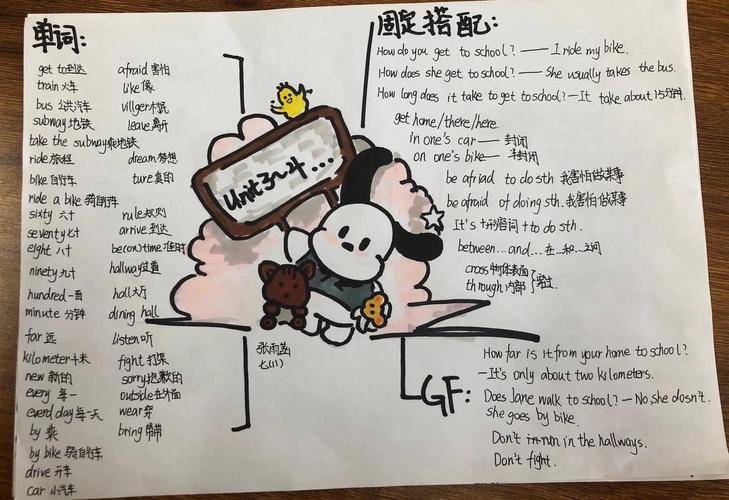
(图片来源网络,侵删)
- Explaining the "What":
- "So, what exactly is a Mind Map? It's a radiant structure that starts with a central idea in the middle."
- "From there, we draw main branches for our key themes, and then sub-branches for details."
- "Remember to use keywords, not full sentences. This keeps the map concise and easy to process."
- Explaining the "Why" (Benefits):
- "Why use Mind Maps? They are highly effective because they engage both sides of your brain—the logical side for structure and the creative side for imagery and color."
- "This dual engagement helps us remember information better and make new connections more easily."
- Live Demonstration:
- "Now, I'm going to create a Mind Map for you. Let's take our topic 'Project Planning' as an example."
- "First, I'll write the central idea in the middle and draw a circle around it."
- "Next, I'll draw my first few main branches. For project planning, I might have branches like 'Goals', 'Timeline', 'Team', and 'Resources'."
- "As you can see, I'm using color coding. My 'Goals' branch is blue, 'Timeline' is green, and so on. This helps me distinguish the categories at a glance."
- "On each branch, I'll add sub-branches with keywords. For example, under 'Goals', I might have 'Increase Sales', 'Launch Product', etc."
- "Feel free to ask questions if anything is unclear during the demo."
Hands-on Practice (实践练习)
Trainer's Goal: Let participants apply what they've learned.
- Giving Instructions:
- "Okay, it's your turn now. We're going to do a hands-on exercise."
- "Please take a piece of paper and some colored pens. Let's create a Mind Map about a topic you know well: 'Your Favorite Movie' or 'Your Last Vacation'."
- "Start with the central idea in the middle. Then, add 4-5 main branches. Think about the key aspects of your topic. For a movie, it could be 'Characters', 'Plot', 'Music', 'Visuals'."
- "Don't worry about making it perfect. The goal is to practice the structure and use keywords."
- During Practice (Walking around):
- "How is it going? Are you finding it easy to branch out from your central idea?"
- "That's a great keyword you've chosen. Try adding a small icon next to it to make it more memorable."
- "Remember to use different colors for different branches. It will make your map much clearer."
Group Activity & Sharing (小组活动与分享)
Trainer's Goal: Encourage collaboration and learning from peers.
- Setting up the Activity:
- "Now, let's form small groups of 3-4 people."
- "In your groups, I want you to create one large Mind Map together. Your topic is 'How to Improve Our Company's Teamwork'."
- "This is a brainstorming session. Everyone should contribute ideas. Use a flip chart or a large whiteboard if you have one."
- Facilitating Discussion:
- "I'll give you 15 minutes for this. Start by discussing the main branches you'll need."
- "Encourage everyone to speak. Remember, there are no bad ideas in a brainstorm."
- "Excellent! I can see you're using icons and color coding effectively in your group map."
Q&A and Wrap-up (提问与解答、
Trainer's Goal: Answer questions, summarize key points, and provide next steps.
- Opening Q&A:
- "Alright, let's come back together. We now have some time for Q&A. What questions do you have about Mind Mapping?"
- "That's a great question. Yes, you can absolutely use digital tools like XMind, MindMeister, or even Miro to create Mind Maps."
- Summarizing Key Takeaways:
- "Let's do a quick wrap-up. Today, we learned that a Mind Map is a visual tool with a central idea, main branches, and sub-branches."
- "The key principles are: use keywords, add colors and images, and embrace the radiant structure."
- "We saw how it can be used for note-taking, brainstorming, and planning."
- Providing Next Steps & Feedback:
- "My challenge for you is to try using a Mind Map for your next meeting or your personal study notes this week."
- "Before we finish, I'd appreciate your feedback. Please take a moment to fill out the short evaluation form on your table. It will help us improve future training sessions."
- "Thank you all for your active participation and creativity today. I hope you found this module valuable. Have a great day!"
Part 3: Sample Training Agenda (培训议程示例)
This is a simple agenda you can adapt for your own training.
Training Module: Mastering Mind Mapping for Productivity 培训模块:精通思维导图以提升效率
| Time | Duration | Topic / Activity | Trainer's Notes / Key Phrases |
|---|---|---|---|
| 09:00 - 09:15 | 15 min | Welcome & Icebreaker 欢迎与破冰 |
"Welcome everyone. Today we'll learn..." "Let's start with a quick icebreaker..." |
| 09:15 - 09:45 | 30 min | What is a Mind Map? 思维导图是什么? |
"A Mind Map is a visual tool..." "It starts with a central idea..." "Let's look at the benefits..." |
| 09:45 - 10:15 | 30 min | Live Demonstration 现场示范 |
"Now, I'll create a map on '...' for you." "Notice how I use keywords and colors..." |
| 10:15 - 10:45 | 30 min | Individual Practice: Personal Goals 个人练习:个人目标 |
"Now it's your turn. Create a map about your 'Personal Goals for this Year'." |
| 10:45 - 11:15 | 30 min | Group Activity: Project Brainstorm 小组活动:项目头脑风暴 |
"In groups, create a Mind Map for 'Our Next Marketing Campaign'." |
| 11:15 - 11:30 | 15 min | Q&A, Summary & Feedback 提问、总结与反馈 |
"Any questions?" "Let's summarize what we've learned..." "Please fill out the feedback form." |
希望这份全面的资源能帮助您成功地进行英语思维导图培训!
标签: 思维导图高效英语培训法 英语培训思维导图技巧 思维导图英语高效学习法
版权声明:除非特别标注,否则均为本站原创文章,转载时请以链接形式注明文章出处。